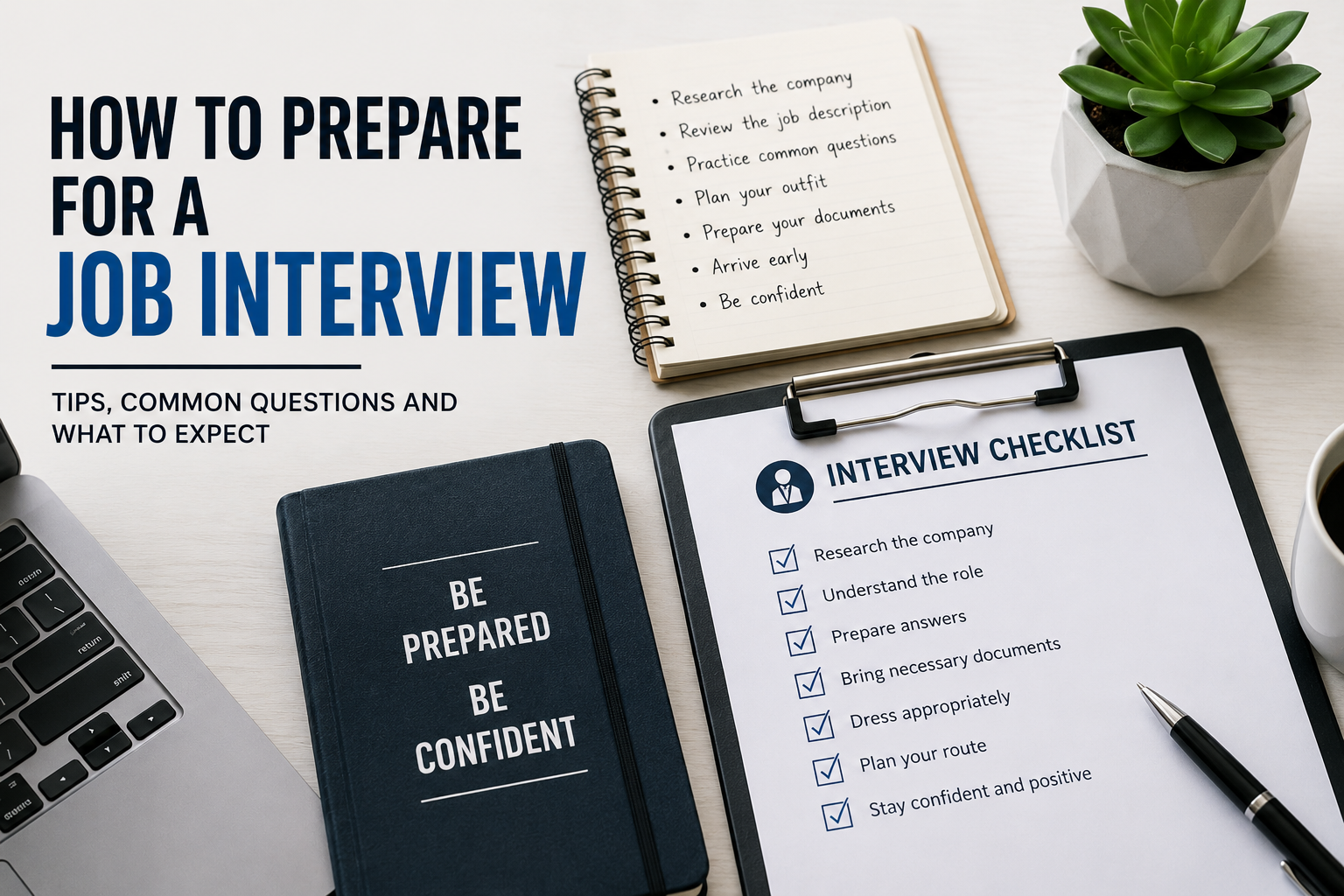
Getting invited to a job interview is an important step in the recruitment process. It gives you an opportunity to explain your experience, demonstrate your skills and show an employer why you could be suitable for the position.
Good preparation can help you feel more confident and make it easier to answer questions clearly.
Whether you are attending your first interview or preparing for a new career opportunity, this guide explains how to prepare for a job interview in South Africa.
1. Research the Company
Before your interview, take some time to learn about the company.
Look for information such as:
- What the company does
- The products or services it provides
- Where it operates
- The type of customers it serves
- The position you applied for
- The skills required for the position
This preparation can help you give more relevant answers during the interview.
2. Read the Job Description Carefully
Go back to the original vacancy and read the requirements again.
Pay attention to:
- Required qualifications
- Work experience
- Skills
- Responsibilities
- Licences or certificates
- Working hours
- Location
Think about examples from your own experience that demonstrate the skills the employer is looking for.
3. Prepare Your Answer to “Tell Us About Yourself”
This is one of the most common interview questions.
Your answer should briefly explain:
- Who you are professionally
- Your relevant experience
- Your important skills
- Why you are interested in the position
For example:
I am a reliable and hardworking professional with experience in operations and customer-focused environments. I have developed strong communication, organisational and problem-solving skills through my previous roles. I am now looking for an opportunity where I can use my experience while continuing to grow professionally.
Keep your answer relevant to the position.
4. Prepare for Common Interview Questions
Preparing for common interview questions can help you feel more confident and organised during your job interview. Employers may ask about your experience, strengths, motivation, teamwork, and how you handle different situations at work.
Some common interview questions include:
- Tell us about yourself.
- Why do you want to work for our company?
- Why should we hire you?
- What are your strengths?
- What is one area you are working to improve?
- What experience do you have that is relevant to this position?
- Where do you see yourself in the future?
- Why did you leave your previous job?
- How do you handle pressure?
- How do you work as part of a team?
It is a good idea to prepare for these questions before your interview, but avoid memorising your answers word for word. Your responses should sound natural, honest, and relevant to the position.
For detailed guidance and example answers, see our guide:Common Job Interview Questions and How to Answer Them
5. Use Real Examples
When answering questions about your skills or experience, give specific examples where possible.
For example, instead of saying:
I am good at solving problems.
You could explain a situation where you identified a problem, what action you took and what the result was.
A useful structure is:
Situation → Action → Result
This helps you give clear and organised answers.
6. Choose What to Wear
Your clothing should be clean, neat and appropriate for the position and company.
For many professional interviews, suitable clothing may include:
- Clean formal or smart-casual clothing
- Neat shoes
- Well-presented hair
- Minimal distracting accessories
If you are unsure about the dress code, it is generally better to look neat and professional.
7. Prepare Your Documents
Before leaving for the interview, check whether the employer requested any documents.
Depending on the position, you may need:
- CV
- Copies of qualifications
- Identification document
- Driver’s licence
- Professional driving permit, where applicable
- Certificates
- References or other requested documents
Keep your documents organised in a folder.
Only provide documents that are requested or reasonably required for the recruitment process.
8. Plan Your Journey
If the interview is in person, plan your route before the interview day.
Check:
- The interview location
- Travel time
- Available transport
- Parking arrangements
- The company’s entrance or reception area
Try to arrive early enough to allow for unexpected delays.
If the interview is online, test your internet connection, camera and microphone beforehand.
9. Be Professional During the Interview
When you arrive, greet people politely and communicate professionally.
During the interview:
- Listen carefully to each question.
- Take a moment to think before answering.
- Speak clearly.
- Maintain appropriate eye contact.
- Avoid interrupting the interviewer.
- Be honest about your experience.
- Ask for clarification if you do not understand a question.
You don’t need to rush your answers.
10. Ask Questions
At the end of many interviews, the interviewer may ask whether you have any questions.
Prepare one or two relevant questions.
For example:
“What would success look like in this position during the first few months?”
or
“What are the next steps in the recruitment process?”
Asking thoughtful questions can show that you are interested in understanding the role.
11. Be Honest About Your Experience
Never exaggerate your qualifications, experience or skills during an interview.
If you do not know something, it is better to be honest and explain that you are willing to learn.
Employers may verify qualifications, employment history and other information during recruitment.
12. What to Do After the Interview
After the interview, make a note of:
- Company name
- Position
- Interview date
- Names of interviewers, if appropriate
- Any information about the next steps
If the employer provides a timeframe for feedback, give them reasonable time before following up.
Do not assume that a delayed response automatically means your application was unsuccessful.
Common Interview Mistakes to Avoid
Try to avoid these common mistakes:
- Arriving late without contacting the employer
- Not researching the company
- Giving very long answers
- Speaking negatively about previous employers
- Providing false information
- Using your phone during the interview
- Not listening carefully
- Failing to understand the position
- Dressing inappropriately
- Not preparing any questions
Preparation can help you avoid many of these problems.
Final Thoughts
A successful interview starts with preparation.
Research the company, understand the position, prepare examples from your experience and make sure you know where and when the interview will take place.
Most importantly, be professional, honest and confident. You do not need to know every answer perfectly. What matters is that you communicate clearly and demonstrate how your skills and experience can contribute to the position.
If you are still preparing your application, read our guide on How to Write a Professional CV for Jobs in South Africa.
You can also read How to Find a Job in South Africa for additional job-search strategies.